


7 Smart Ways to Reduce Aseptic Tomato Paste Export Costs (Latest Guide)
Reducing Aseptic Tomato Paste Export Costs is vital for staying competitive in the global market. Whether you’re exporting to the Gulf, Europe, or Asia, finding smart ways to minimize costs without sacrificing quality can dramatically increase your profit margins.
📌 Table of Contents
- Understand All Cost Components
- Optimize Aseptic Packaging Choices
- Use Local Resources & Raw Material Sourcing
- Leverage Government Incentives & Tariff Reductions
- Streamline Logistics and Freight Partnerships
- Automate Quality Control & Documentation
- Build Long-Term Contracts with Buyers & Suppliers
1. Understand All Cost Components
Start by breaking down all direct and indirect costs involved in exporting aseptic tomato paste:
- Raw materials (tomatoes, citric acid, etc.)
- Aseptic drum or bag-in-box packaging
- Factory labor and utilities
- Inland transport
- Export documentation & certification (Halal, ISO, Phytosanitary)
- Freight charges (sea/air)
- Destination taxes and duties
A detailed cost analysis helps identify hidden costs that can be reduced.
2. Optimize Aseptic Packaging Choices
Packaging impacts both shelf life and logistics costs. Compare the following:
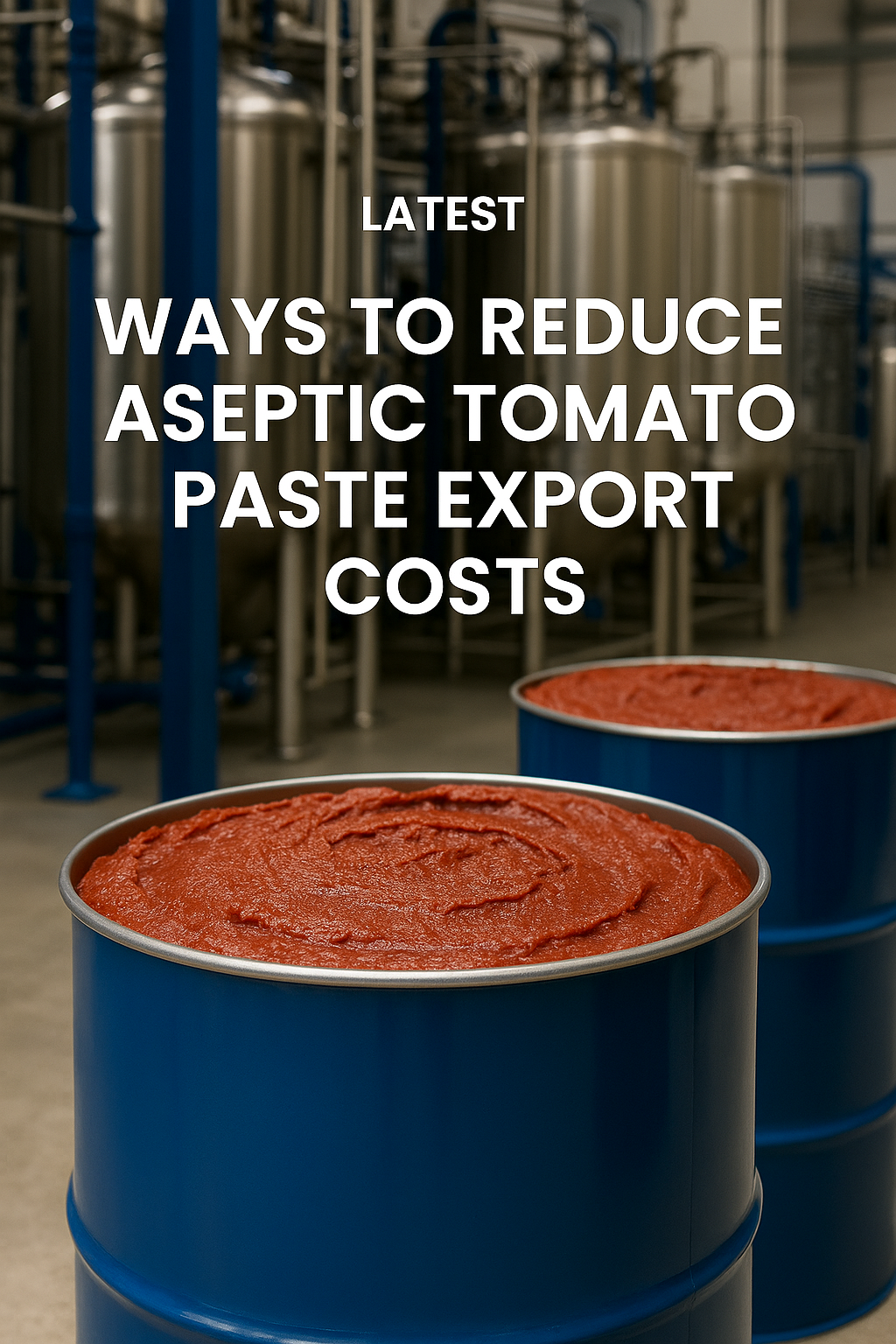
- Steel drums (220 kg): Great for long-distance and stacking
- Bag-in-box: More affordable for smaller volumes
- Flexitanks: Ideal for bulk buyers
Reducing packaging weight or switching to regional packaging standards can save thousands per container.
3. Use Local Resources & Raw Material Sourcing
Sourcing tomatoes from local farms and processing them nearby minimizes inbound costs. Additionally:
- Partner with farmers during harvest season to fix lower prices.
- Use local filler and cap suppliers.
- Choose regional third-party labs for COA (Certificate of Analysis).
This strategy ensures freshness and lowers transportation costs.
4. Leverage Government Incentives & Tariff Reductions
Many countries offer export subsidies, tax returns, or tariff reductions to stimulate exports:
- Apply for VAT refund schemes
- Research trade agreements (like Iran-Turkey Free Trade)
- Use customs brokers familiar with Gulf regulations
This alone can save 5–10% per shipment.
5. Streamline Logistics and Freight Partnerships
Shipping is one of the largest cost elements. Build long-term relationships with:
- Freight forwarders
- Shipping lines with bulk pricing
- Warehouses near seaports (Bandar Abbas, BIK)
Consolidate multiple buyers into one container to share costs. Also consider direct deliveries instead of via transshipment.
6. Automate Quality Control & Documentation
Manual paperwork wastes time and money. Automate:
- COA generation
- Export declaration
- Packing lists & invoices
Use ERP tools or platforms that connect with customs digitally. Save man-hours and avoid costly delays.
7. Build Long-Term Contracts with Buyers & Suppliers
Secure 12-month contracts for:
- Tomato purchases
- Packaging materials
- Logistics partners
- Customers
Stability in pricing and supply chain leads to better negotiation power and less fluctuation.
🔗 Internal Link:
Read more: Must-Know Export Tax Facts for Aseptic Tomato Paste
🌐 External Link (Dofollow):
Learn more about Trade Facilitation by WTO
💼 Final Words
Mastering these smart strategies to reduce Aseptic Tomato Paste Export Costs empowers you to stay competitive and profitable in 2025 and beyond.
📩 Contact Us today for supplier pricing, freight solutions, and expert consulting.