





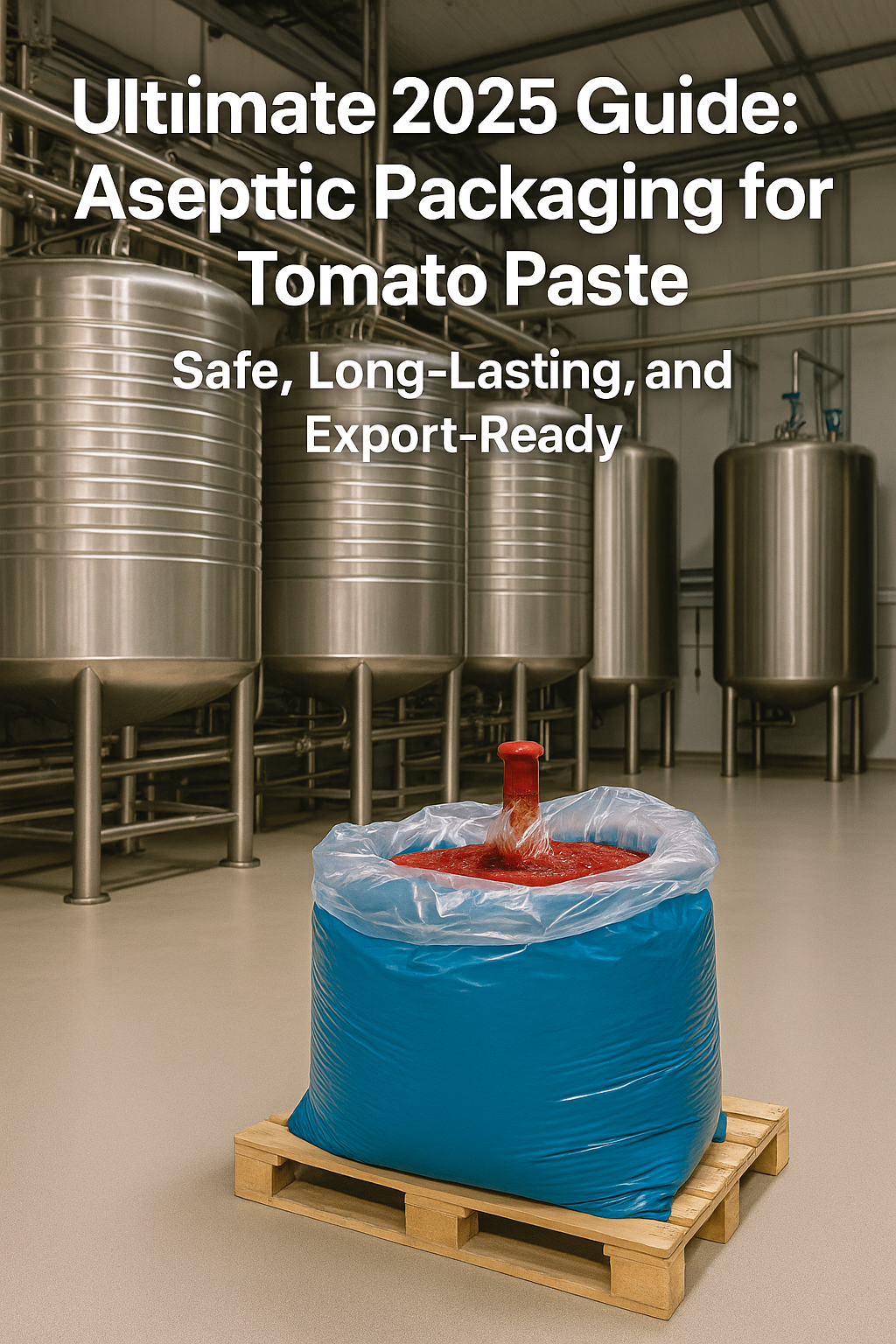
The aseptic packaging for tomato paste is revolutionizing global food exports. It ensures long shelf life, product safety, and compliance with international standards — all without preservatives.
In this guide, we’ll explain how the process works, why it matters for importers, and what sets it apart from traditional packaging methods.
📌 Table of Contents
- What is Aseptic Packaging for Tomato Paste?
- Why Aseptic Packaging is Crucial for Export
- Step-by-Step Aseptic Packaging Process
- Quality Control & Sterility
- Advantages Over Traditional Packaging
- Global Standards and Compliance
- Final Thoughts + How to Get in Touch
What is Aseptic Packaging for Tomato Paste?
Aseptic packaging for tomato paste involves sterilizing the paste and packaging separately, then filling the product into sterile containers in a controlled environment. This allows for 18–24 months of storage at room temperature without spoilage.
🌍 Why Aseptic Packaging is Crucial for Export
Aseptic packaging is essential for international shipping, especially in regions like Europe and Africa. It eliminates microbial contamination and complies with the strictest import regulations.
Aseptic tomato paste is typically packed in 220–240 kg drums or in 24-ton flexi tanks for bulk export.
⚙️ Step-by-Step Aseptic Packaging Process
| Step | Description |
|---|---|
| 1. Product Sterilization | Tomato paste is heat-treated at 90–110°C to destroy bacteria. |
| 2. Packaging Sterilization | Steel drums or bags are steam or chemically sterilized. |
| 3. Aseptic Filling | Product is filled into drums using closed-loop aseptic machines. |
| 4. Sealing | Filled drums are sealed under sterile airflow. |
| 5. Storage | Drums are stored at room temperature for up to 2 years. |
🔍 Quality Control & Sterility
Every batch undergoes lab testing for:
- Brix level (°Bx)
- Acidity (pH)
- Color consistency
- Microbial safety
Tomexa ensures full traceability and compliance with ISO 22000, HACCP, and FDA standards.
✅ Advantages Over Traditional Packaging
- No refrigeration required
- No preservatives
- Suitable for long-distance export
- Lower risk of spoilage or leakage
- High cost-efficiency
🌐 Global Standards and Compliance
Aseptic systems meet the requirements of:
- FDA Aseptic Guidelines
- European Food Safety Authority (EFSA)
- Codex Alimentarius International Standards
📣 Final Thoughts
The aseptic packaging for tomato paste is the gold standard in global trade. Whether you’re an importer or distributor, choosing aseptic ensures reliability and peace of mind.
👉 Contact Tomexa today to receive a customized quote and documentation.