





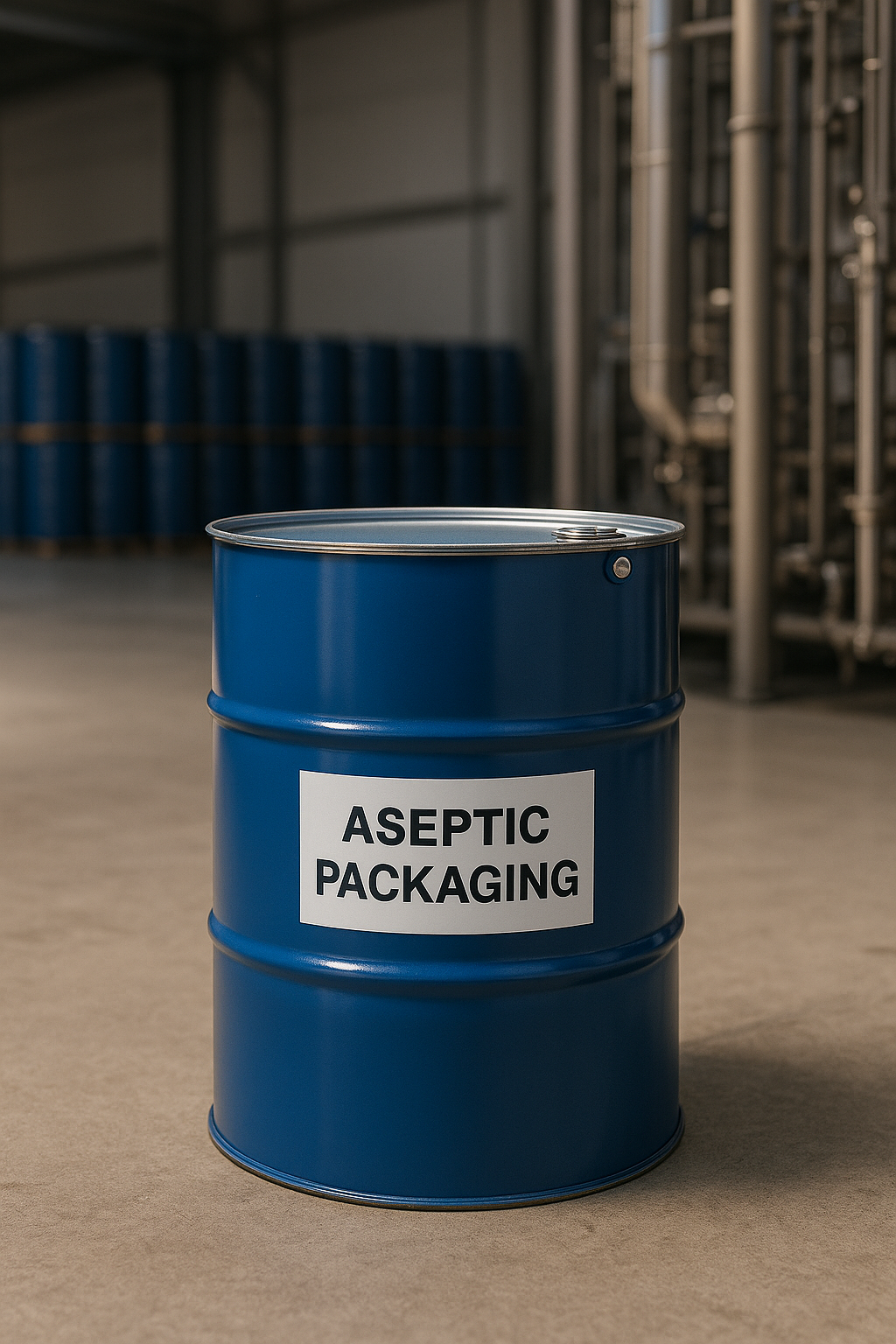
Aseptic drum packaging has become a trusted solution for international food importers. Especially when dealing with tomato paste, fruit concentrates, or liquid-based food products, this method ensures hygiene, shelf life, and safety — without the need for refrigeration.
What Is Aseptic Drum Packaging?
Aseptic packaging is a process in which the product and packaging materials are sterilized separately before being combined in a sterile environment. This ensures the contents remain free from bacteria, yeast, and mold.
Why Choose Aseptic Drum Packaging?
1. Long Shelf Life Without Preservatives
Aseptic packaging allows products to stay fresh for 12–24 months without refrigeration or added chemicals.
2. Cost Savings in Shipping and Storage
Drums are compact and durable, reducing shipping costs and space requirements. There’s no need for cold-chain logistics.
3. High Product Safety
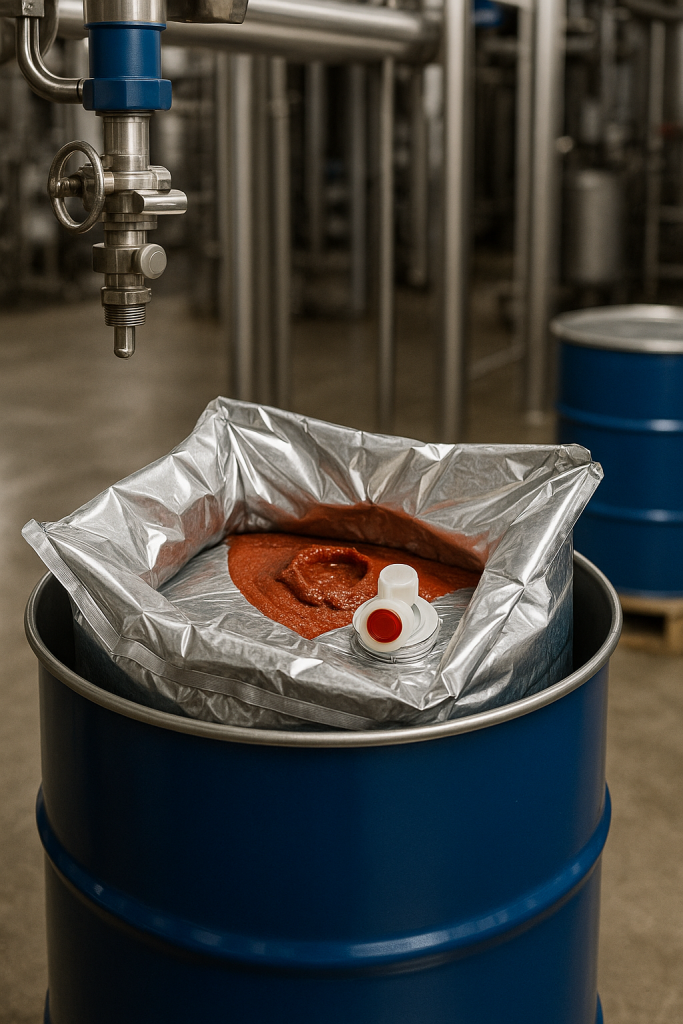
With sterile conditions, contamination is minimized. The multi-layered inner bags (usually made of aluminum or polyethylene) offer excellent protection.
4. Versatile for Different Products
Perfect for tomato paste, fruit concentrates (like apple, peach, pomegranate), sauces, and dairy alternatives.
Components of Aseptic Drum Packaging
- Outer Drum: Typically a metal or heavy-duty plastic drum, providing physical protection.
- Inner Bag: Multi-layered aseptic bag, often aluminum-based, maintaining product sterility.
- Cap/Valve: Ensures controlled filling and discharge, maintaining hygiene.
Common Drum Sizes & Capacity
| Drum Size | Capacity (Liters) | Common Use |
|---|---|---|
| 220L | 220 kg | Tomato paste, apple concentrate |
| 1000L IBC | 1000 kg | Bulk shipments, larger orders |
Ideal Products for Aseptic Drums
- Tomato Paste (28–30%, 36–38% Brix)
- Fruit Concentrates (apple, peach, etc.)
- Pulp and purées
- Liquid dairy substitutes
Global Standards & Compliance
When exporting or importing, ensure your aseptic drums meet food safety standards such as:
- ISO 22000
- BRC (British Retail Consortium)
- FDA-approved materials for inner bags
Tips for Importers
- Ask for a Certificate of Analysis (COA) before shipping.
- Inspect drum seals upon arrival.
- Check supplier experience in aseptic handling and sterilization.
For more details, visit the official packaging guidelines at https://www.fda.gov/food.
Conclusion
Aseptic drum packaging is not just a technical solution — it’s a strategic advantage for food importers. It ensures your products arrive safe, fresh, and cost-efficiently. Whether you’re importing tomato paste or fruit concentrates, this method guarantees better control, less waste, and higher satisfaction.
If you have any questions or need further information, feel free to Contact Us. We’re here to help!