





Introduction
Are you looking to import tomato paste for your business? This comprehensive guide will walk you through everything you need to know about tomato paste export, including the best suppliers, packaging types, logistics, and quality standards. Whether you’re a first-time importer or looking to expand your sourcing, this article is tailored to give you a strong foundation in the world of tomato paste trading.
What is Tomato Paste?
Tomato paste is a thick, concentrated product made by cooking fresh tomatoes for several hours to reduce water content, straining out seeds and skin, and cooking it again to achieve the desired consistency. It is widely used in food processing industries, especially for making sauces, soups, and canned meals.
Why Tomato Paste Export is a Profitable Business
Exporting tomato paste has become a booming industry due to increasing demand in both developed and developing countries. The main reasons include:
- Long shelf life (especially in aseptic packaging)
- High demand from food manufacturers
- Year-round availability from top producers like Iran, Italy, China, and Turkey
Key Packaging Types for Tomato Paste Export
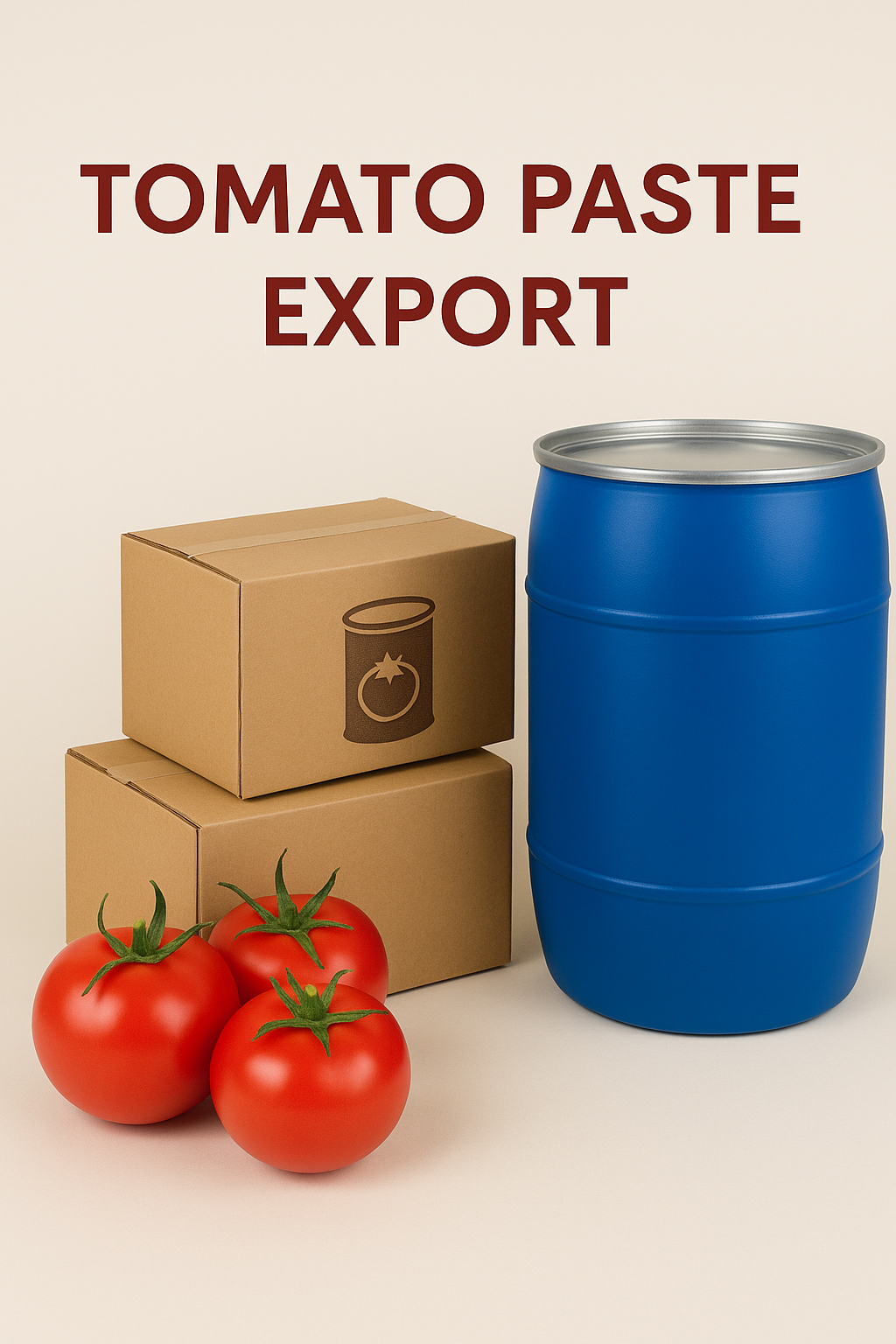
1. Aseptic Drum Packaging (220L)
- Preserves product for up to 2 years
- Ideal for bulk buyers
- Requires industrial processing equipment
2. Canned Tomato Paste (400g – 3kg)
- Convenient for retail or wholesale
- Shelf-stable and cost-effective
3. Pouch Packaging (50g – 1kg)
- Lightweight and flexible
- Suitable for consumer markets
Quality Standards to Consider
When importing tomato paste, ensure the product complies with international standards such as:
- Brix level (typically 28–30%)
- No additives or preservatives
- Certification: ISO, HACCP, Halal, FDA (for US market)
Top Exporting Countries
| Country | Known For |
|---|---|
| Iran | High-quality paste with competitive pricing |
| China | Large production capacity |
| Italy | Premium quality and organic options |
| Turkey | Balanced quality and pricing |
Finding the Right Supplier
What to Look for:
- Verified production facilities
- Export experience
- Transparent pricing and logistics
- Responsive communication
Where to Find Suppliers:
- Trade shows (e.g., Gulfood Dubai)
- B2B platforms (e.g., Alibaba, Tradekey)
- Industry directories
- Company websites like Tomexa
Shipping and Documentation
Required Documents:
- Commercial Invoice
- Bill of Lading
- Certificate of Origin
- Health Certificate
- Packing List
Shipping Methods:
- Sea Freight: Economical for large orders
- Air Freight: Suitable for small, urgent shipments
Common Challenges in Importing Tomato Paste
- Customs delays
- Product quality mismatch
- Labeling and compliance
Pro Tips to Avoid Issues:
- Ask for pre-shipment samples
- Hire a third-party inspection company
- Clarify incoterms before signing contract
Internal Link
Learn more about our Aseptic Drum Packaging.
External Link
Discover the latest trade insights from World’s Top Exports.
Contact Us
Have questions or need a reliable tomato paste supplier?
Contact Us today. Our experts are ready to assist you!